This started as a test, not a project. Every new generation of models gets a private exam from us: hand it something it shouldn’t be able to do yet, and see where it breaks. The biggest jump in the latest models from OpenAI and Anthropic isn’t in how they write. It’s that they can now sit at a computer and use the same tools a professional uses, and that they understand space and motion well enough to build in 3D. So that’s what we tested.
The ask was to build a measured model of the Second Beis HaMikdashבית המקדשthe Holy Temple in Jerusalem and turn it into Google Street View. Only two views: walk it at eye level, or look down from above. Street mode had to feel alive, with people, korbanosקרבנותofferings, smoke and sound. Then we went to sleep, leaving one sentence as the brief:
“A street view looking app that lets the person wander around and in the beis hamikdash and feel like he understands it, with sounds, point of interest popups in the sidebar etc. Make sensible decisions that advance this cause.”
Two days later it was live at olehregel.com. Five days in, it had three intertwined stories, a night version, Hebrew and Yiddish, and a source behind every pin.
The models did the work, and it is genuinely theirs. But reading back through the session, the turning points are rarely the big instructions. They’re one-line nudges: try this tool, give that part to the other model, test three before you make five hundred, and “good enough” isn’t. Here’s what it looks like, and how it got built.
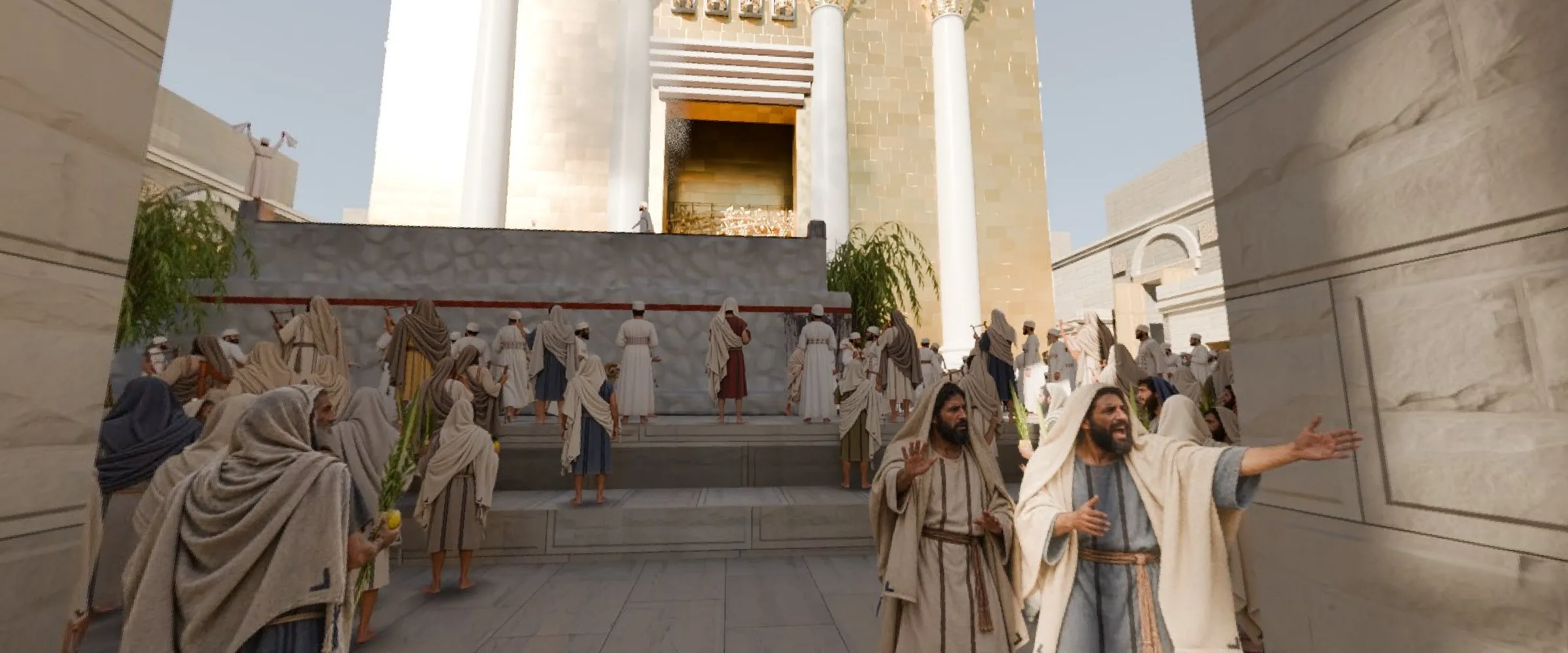
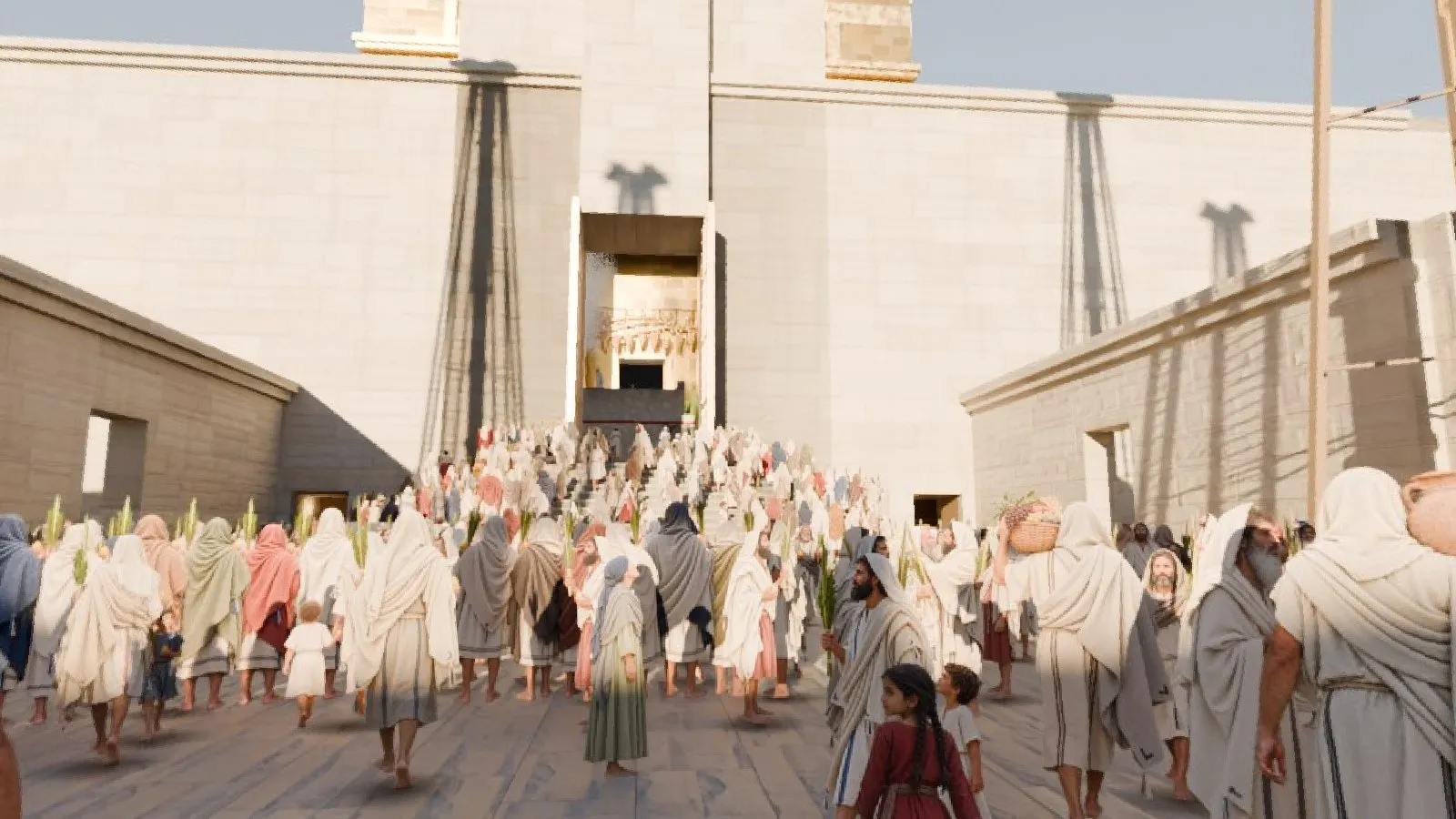
Bronze doors, thrown wide. Over the heads in front of you: the leviim lined up on the duchan, the fire on top of the mizbe'ach, and behind it the face of the Heichal, white stone and gold. From the city you only ever saw its side.
Research before geometry
The first instruction wasn’t “build it.” It was “find out.” Claude (Opus 5.5, leading the whole session) sent out research agents. They pulled dimensions from Mishnah Middosמדותthe tractate that measures the Temple and Josephus, the archaeology of the Temple Mount (Robinson’s Arch, the Chulda gatesשערי חולדהthe Chulda gates, the southern entrances, the stepped street up from the Shiloachשילוחthe Shiloach pool), and the shape of the real hill. One more agent researched how you would even build a Street View of a place that no longer exists, before a single wall went up.
The research came back as data, not essays. Every measurement is recorded in amosאמותcubits; the model uses 52.5 cm, with a switch wherever the opinions split, such as where exactly the mizbe’achמזבחthe altar stands. And the whole thing sits on the real ground: the walls stand on the actual hill, and the street from the Shiloach climbs the actual slope.
Pick the shape of the problem
The most important decision was already in the brief: not “a 3D Temple” but “Google Street View of the Temple.” That constraint is what made it possible. A web browser can’t draw a scene this detailed in real time. Street View doesn’t have to. It shows a photograph taken at one point, and lets you hop to the next one. So every walkable spot gets a full 360° photograph of the model, and the app wraps it around you, with blue arrows on the ground pointing to the neighbouring spots.
The same instinct paid off again on day two. The hops felt too far apart, and the obvious next step was a free-roaming 3D world. Before building it, we asked a cheaper question: would more photographs, placed well, give the same effect? The model’s answer was yes, if they were placed where you need them rather than evenly. It found every step long enough to lose your bearings and put a midpoint there, and the walk grew from 66 spots to 160.
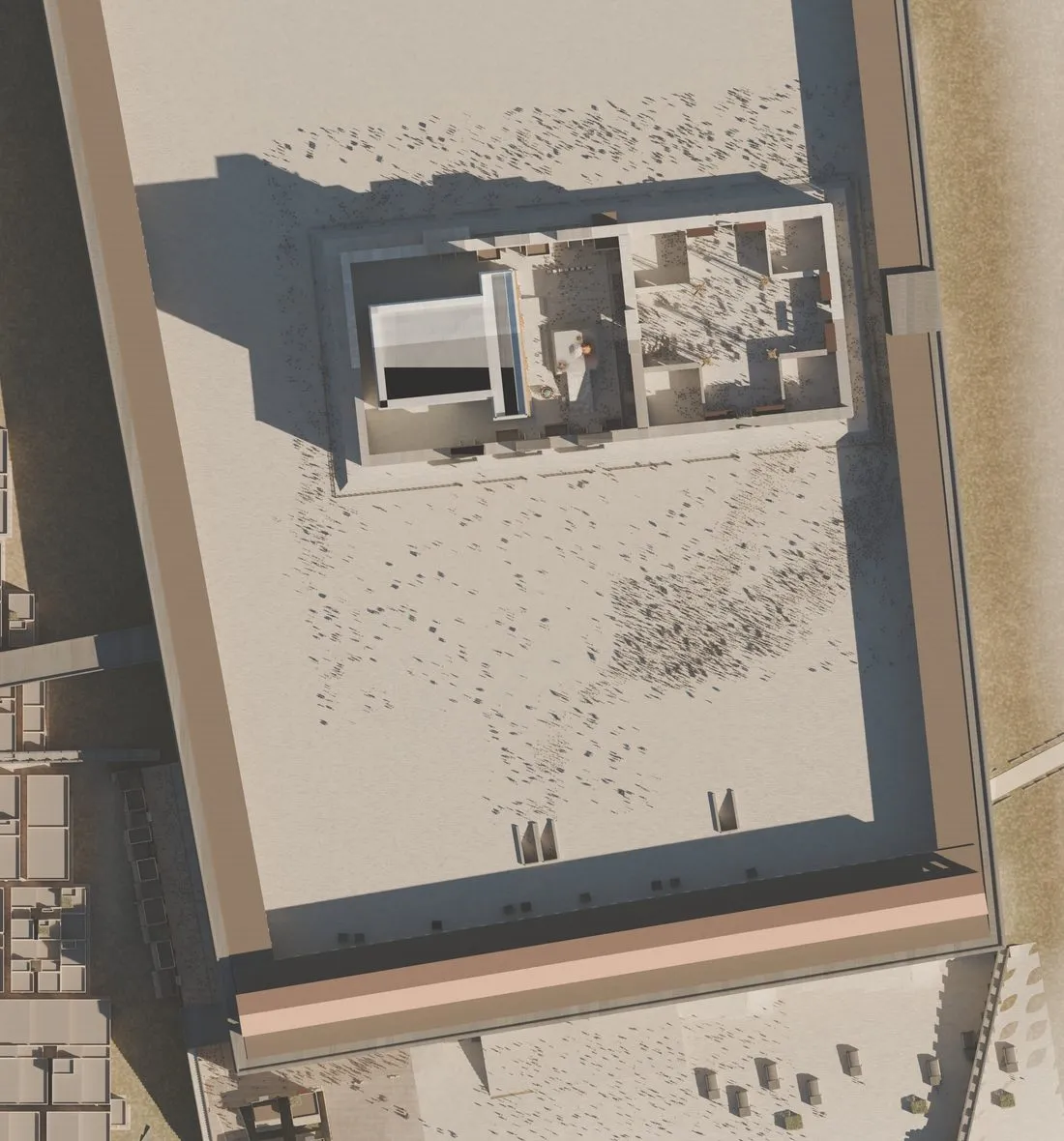
Every area has its own sound, too: crowds, sheep, the leviimלוייםthe Levites, who sang in the Temple’s music. And because every photograph knows which objects it can see, fixing a bench re-renders only the views that include the bench. Re-rendering the entire world costs about eight dollars.
A crew, and knowing who’s good at what
Claude built the core: the platform, the courts, the mizbe’ach, the Heichalהיכלthe Temple building itself. The rest went to a crew of Codex agents running OpenAI’s GPT-6 Astra, each taking one part of the world: the city, the market, the landscape with its 8,697 trees, the Heichal’s facade, the top of the mizbe’ach, the pilgrims’ road.
Some of the best calls were about who should do what. Claude assumed Codex couldn’t drive Blender itself. We thought it could, and it could, which turned the second model from an advisor into a builder. When Claude’s fire and logs on top of the mizbe’ach kept coming out wrong, the answer wasn’t another round of polish. The job went to Astra.
The loop that held it together was simple. Claude rendered each part, looked at the pictures, and sent back a critique, round after round, until it held up. One round of rooftop sukkosסוכותfestival booths came back with s’chachסכךthe leafy roof of a sukkah letting through more sun than shade, which would make a sukkah pasulפסולinvalid. It went back. And when an early review called something “good enough to accept,” the reply was “strive for greatness.” That became the working standard for the rest of the week.
The people are photographs of no one
Buildings are the easy part. The hard part is people: thousands of them, in period dress, seen from every angle, none floating and none walking into a wall. Instead of modelling them in 3D, every figure is a photograph that was never taken. It starts as a written description (clothing, pose, props, and the rules), becomes a photorealistic image from an image model, gets cut out, and stands in the scene as a flat card that turns to face the camera, with a shadow at its feet.
This is where experience counted most. The model expected that drawing the same person consistently from several angles would be the hard part. We knew from earlier work that it isn’t: given a reference image, the image model keeps a face and its clothes remarkably steady. That became 973 extra front, back and side views, so a pilgrim you walk past still looks like the same pilgrim from behind. And with a real budget on images, every batch started with three to five samples to look at before the full run.
Other improvements came from just looking. Everyone was walking alone, so people now come in families, pairs and little knots of gossip. Seeing the same person twice in one view is jarring, so duplicates are kept apart. The first faces came out a little too beautiful, too much “our current aesthetic taste,” so the 75 figures nearest the cameras were redone with ordinary faces.
Our standards became part of every description. Kohanim have full, untrimmed beards. Every man’s head is covered, and every married woman’s hair. Feet are bare on Har HaBayisהר הביתthe Temple Mount. Skin tones range from olive to light brown.
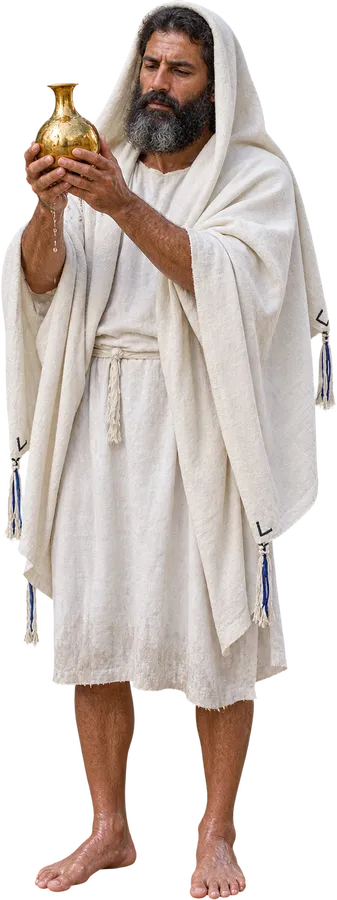
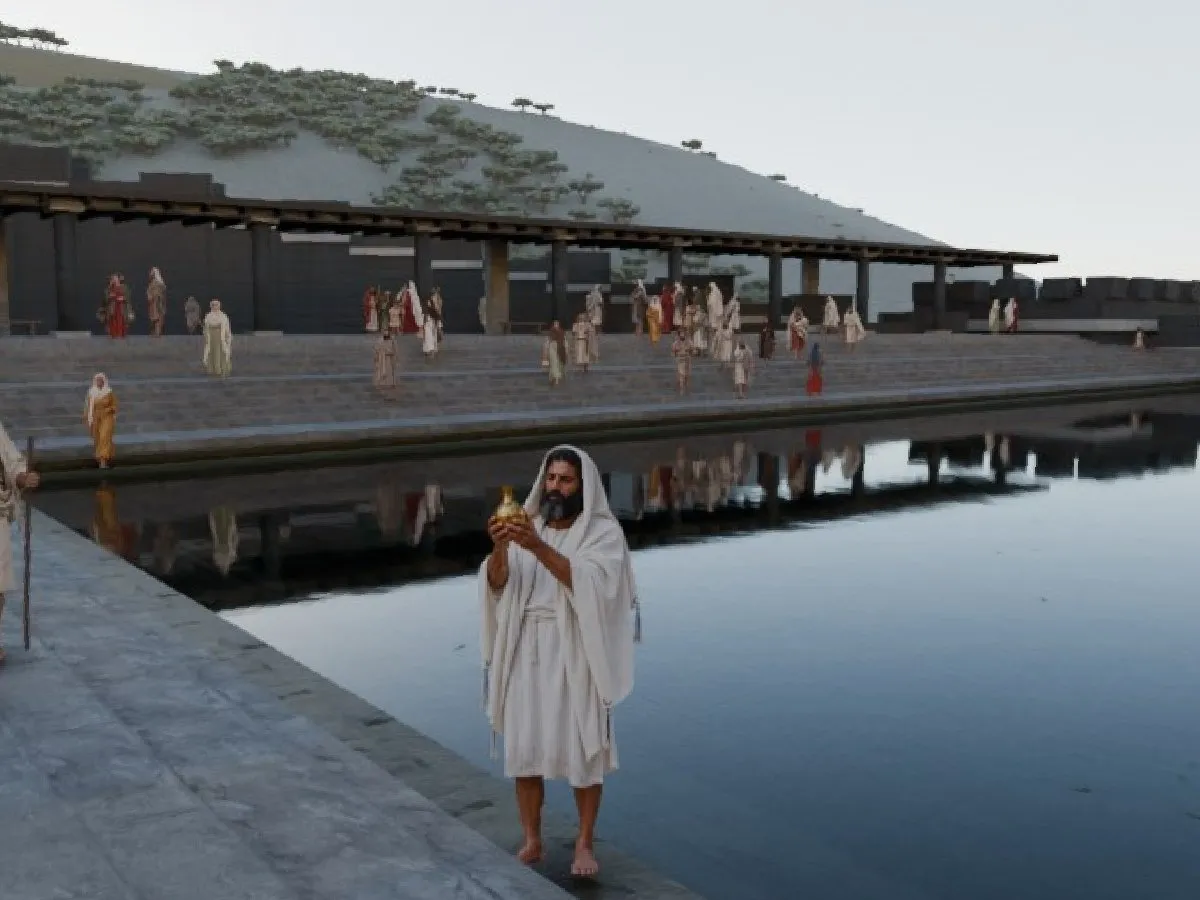
- story_kohen_flask · man_out · 1.68 m
- A Judean kohen in his forties on a wet bottom step, just risen from filling a small GOLDEN FLASK with spring water…
- ✓ PLAIN white linen clothes, NOT priestly garments
- ✓ mantle drawn up over his head as his head covering
- ✓ tzitzis: eight strings, one deep blue, at the four corners only
- ✓ full, natural, untrimmed beard
Accuracy is the product
To feel real, the scene needed a real moment, and that started with a question: which year are we showing, and what follows from it? The answer pinned everything down. It is Wednesday, 17 Tishrei 3794, which is 30 September 33 CE, the third day of Sukkos. Yosef Kayafa is Kohen Gadolכהן גדולthe High Priest (his family ossuary was found in 1990), and Rabban Gamliel is probably presiding over the Sanhedrin. It pins down the light too. Sunrise that day was at 6:31, and the sun in every picture stands exactly where it stood.
The model laid out the choices with their sources, and we made the calls. Where Josephus describes what was, and later commentators describe what should have been, the scene follows Josephus and the sidebar explains why. Where the history left room, as with men’s head coverings, we chose the option that respects Orthodox sensibilities and said so. And when the Kohen Gadol could be named, we named him, because a specific person on a specific morning is what makes it feel real.
The review ran in both directions. The model caught the pasul sukkah. We caught a shelamimשלמיםpeace offerings, eaten by their owners meal staged at an impossible hour, and the model then corrected us on the window for eating it (two days and a night, Zevachim 5:7). A planned wedding scene turned out to be impossible on Chol HaMoed, so it became an erusinאירוסיןbetrothal. Jerusalem had no roosters, so the dawn “call of the rooster” is the Temple crier.
From museum plaques to a story
The model’s first guided walk read like museum plaques: accurate, and lifeless. The fix was a different idea of what it was for. It became a story, and everything in view became part of the story, even the things in the distance. With that came one rule: the text has to match what’s on screen. If a line says “thousands,” you’d better see thousands, so every stop was screenshotted and checked against its words.
You are Elazar, nineteen, a potter’s son from Kfar Chananyah in the Galil, who walked four days through the hills of Shomron with half his village. The night before, you watch the torches of Simchas Beis HaShoevaשמחת בית השואבהthe nightly water-drawing celebration of Sukkos. In the morning, you climb from the Shiloach in time to see the water poured on the mizbe’ach. Turn toward something along the way and a “look around” line adds a detail: a neighbour buying a new esrog, children playing knucklebones, the seganסגןthe deputy High Priest waving his cloths.
Then came two more people on the same day, whose paths cross his. Miriam, his wife, sees the courts from the women’s gallery. Yehoshua, a young kohen who wins the once-in-a-lifetime lottery for the ketoresקטורתthe incense offering, goes through rooms no pilgrim ever saw. His first draft cut from scene to scene. It went back, so that you walk from room to room, because the whole point is to understand how the place fits together.
The stories were translated too. Claude did the Hebrew. The Yiddish went to Astra, which writes a more natural היימישע Yiddish, and Astra writes it best when it’s spoken to in Yiddish, so we wrote its prompt in Yiddish, with our own rules: spell it אידיש, never write the Divine Name out, keep loshon kodeshלשון הקודשthe holy tongue: Hebrew and Aramaic words words in their own spelling, and add nothing the English doesn’t say. Then we corrected it by hand.
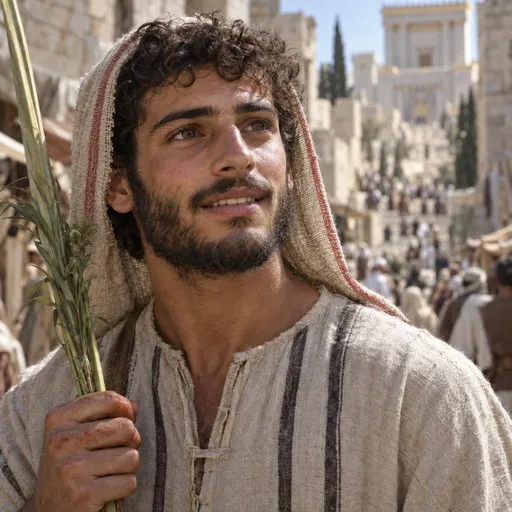
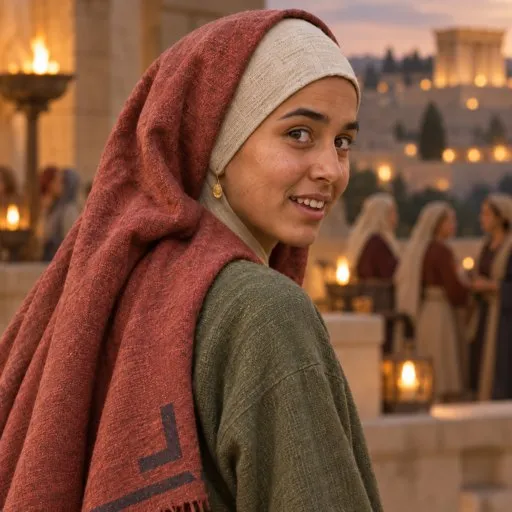
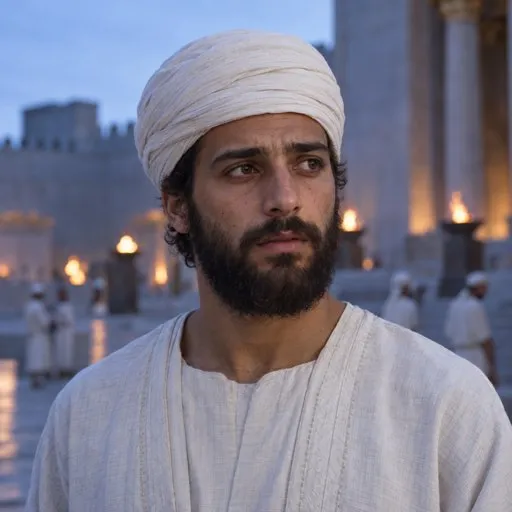
The stories also brought new times of day. Every spot was rendered again at night by torchlight and at dawn. The stories play at 7:30, when the low light rakes across the courts and packs a punch; free exploring stays at 9:00, when everything is easy to see.
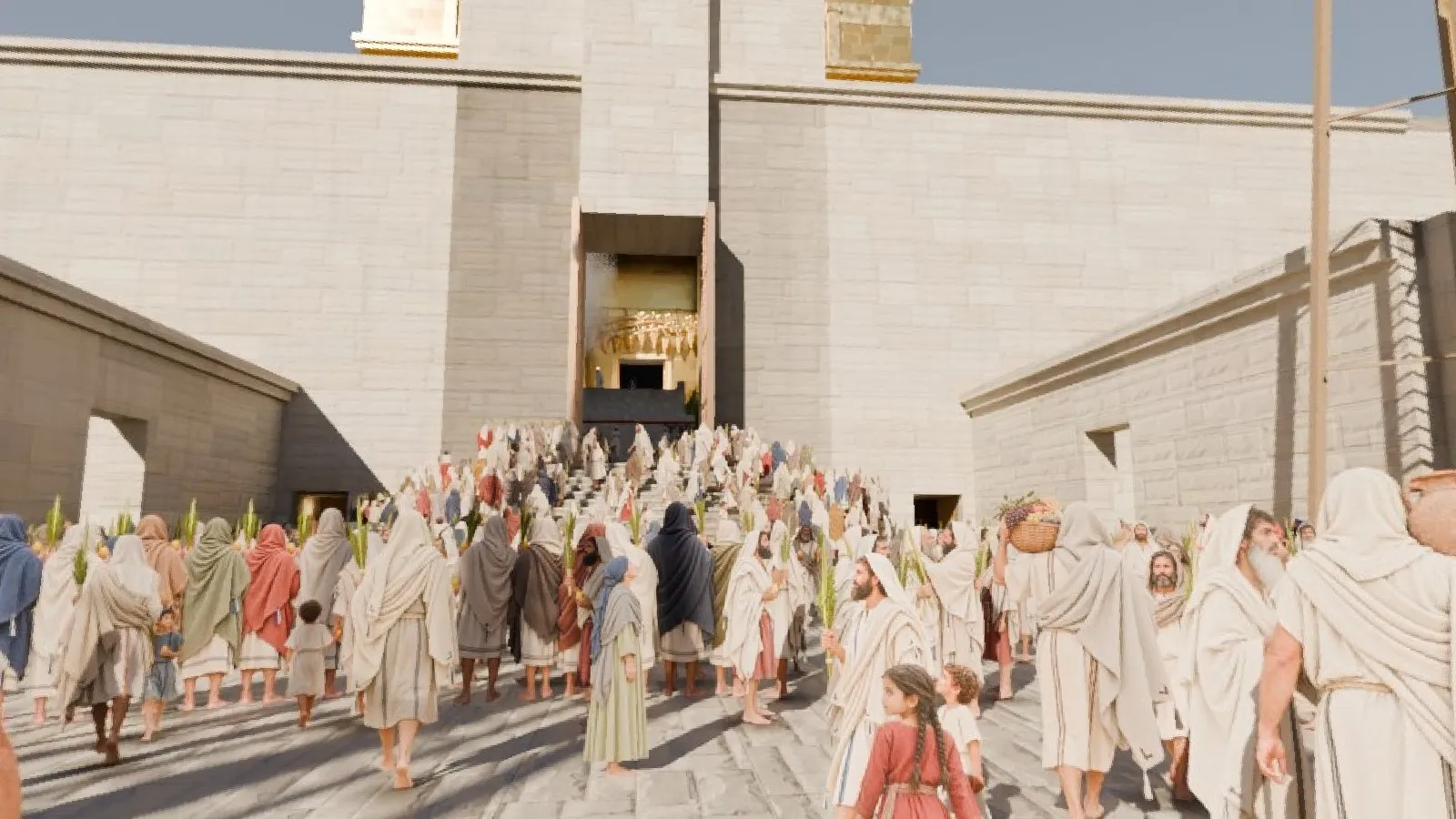
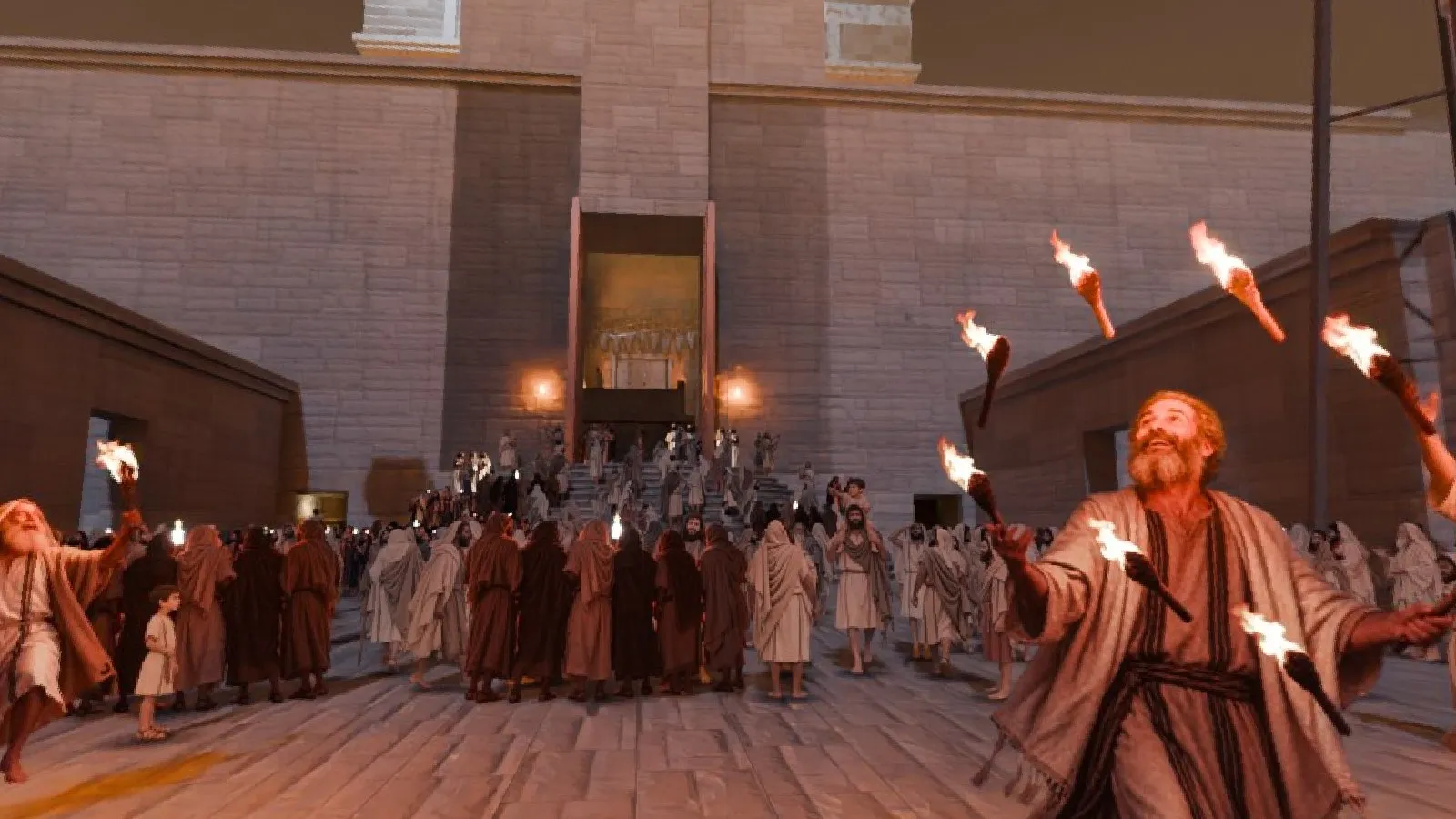
Shipping it like a product
The domain was bought on day three, and there were dozens of releases over five days, because once a fix was asked for and checked, it went out. A feedback button sends every message with the exact spot, the direction you were looking, the time of day, the language and the version. That turned out to be the best bug tracker we had, for our own reports too: a screenshot plus those details is a fix, not a conversation. Then QA agents walk every story stop, looking in every direction for floating people, heads inside benches, and anything that couldn’t have been there.
Here is how far one spot moved in five days:
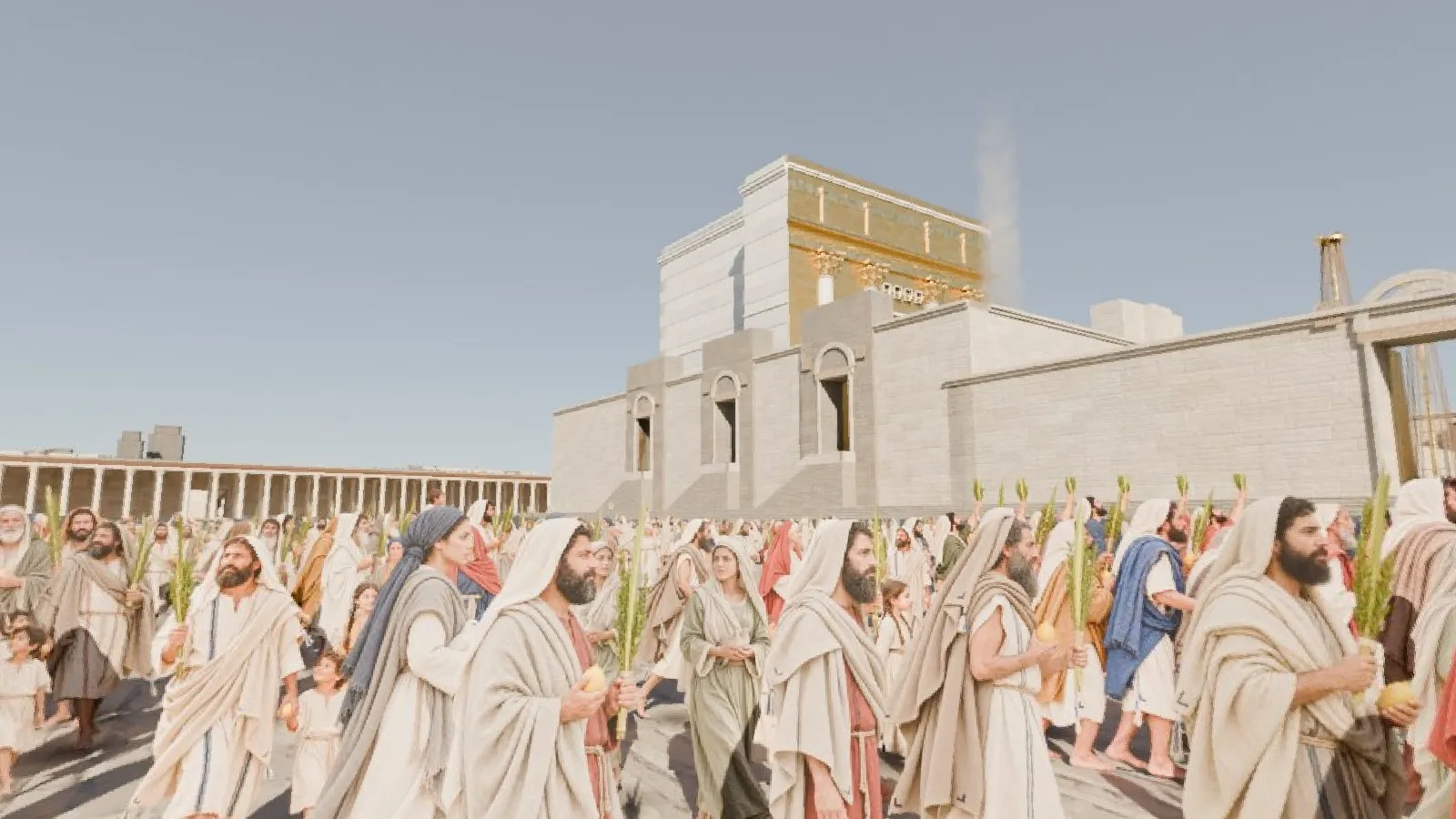
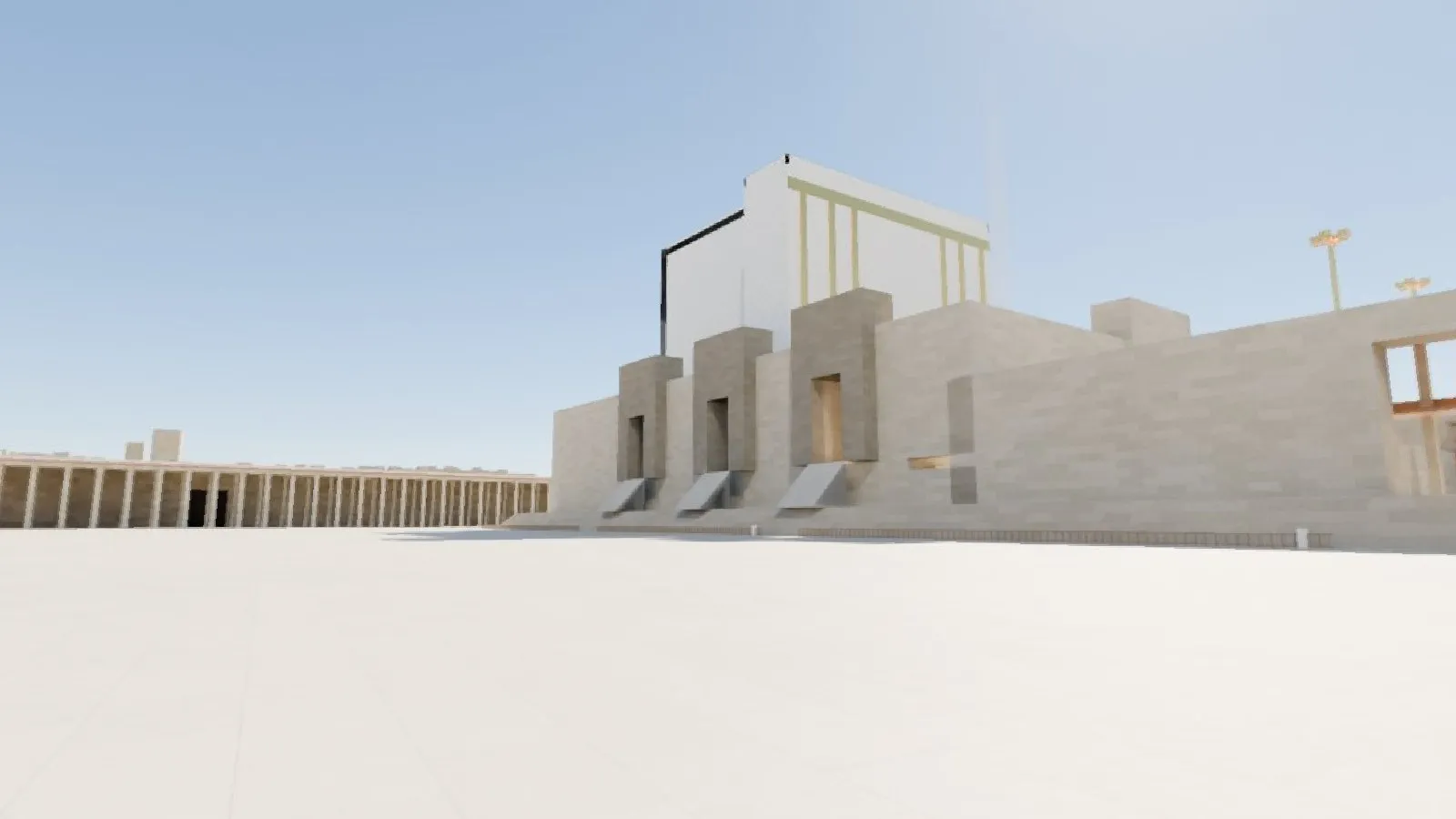
What the test actually showed
The models can do 3D now, but not the way we expected. The win wasn’t a model sculpting shapes by hand. It was a model running a studio: driving professional 3D software, renting a render farm, using an image model as an asset factory, and handing parallel jobs to a second company’s agents. The skill that mattered most was the least glamorous one. The lead model rendered its own work, looked at it, and asked “would it actually look like this?” a few hundred times.
The other result is quieter. Left alone, the model would have built something. What made it this was the other side of the conversation: knowing that Codex could run Blender, that a reference image keeps a face steady, that photographs beat a game engine here, which model writes better Yiddish, that you pin the year before you place the sun, and that “good enough to accept” means keep going. Almost none of that was a big instruction. Most of it was a sentence. The human job was art director and final authority: what’s accurate, what’s tasteful, and what to cut.
Some honest results, too. Free-roam 3D is parked. Turning the photo cards into real 3D figures came out “not realistic, but not bad.” And the failures that hide (a mother floating on a post, a man sitting inside a column) only surface when someone goes looking for them on purpose.
It’s 100% AI-researched and AI-generated, and checked by people who care about the details. Walk it yourself at olehregel.com.